
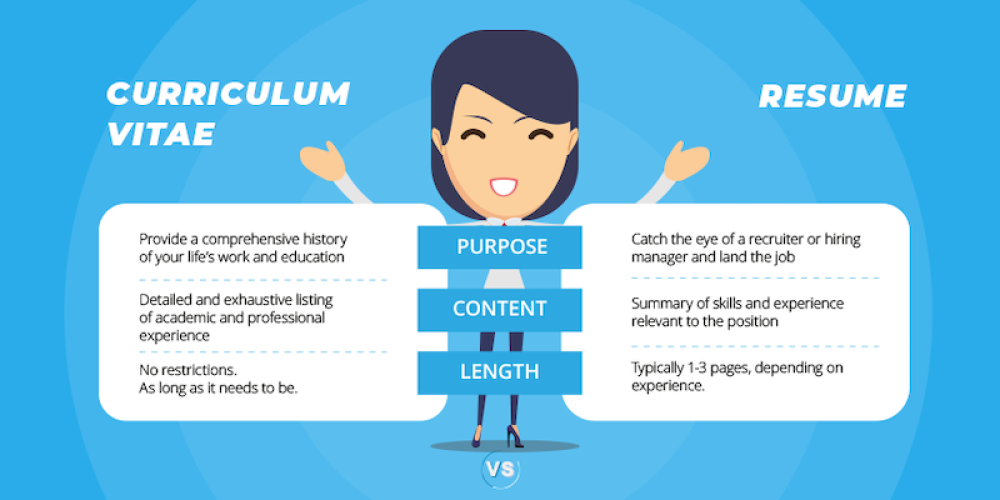

When applying for jobs, understanding the 10 differences between CV and resume is essential. Many job seekers confuse these terms, but each serves a distinct purpose and follows a unique format. Whether you're preparing for an academic position or a corporate job, knowing the cv and resume difference will help you submit the right document for the right opportunity.
10 Differences Between CV and Resume You must Know
Understanding the 10 differences between CV and resume is essential for job seekers aiming to submit the right document for the right opportunity. While many assume that a examples of cv and resume and a resume curriculum are interchangeable, they serve different purposes and follow distinct formats. A cv curriculum vitae provides an exhaustive overview of a person’s academic and professional history, while a resume curriculum is a tailored, concise summary designed to highlight only the most relevant qualifications for a specific job.
What is a CV and Resume?
Before exploring the 10 differences between CV and resume, it’s crucial to understand their fundamental definitions:
- CV (Curriculum Vitae): A detailed and structured document that presents an individual's full academic background, including degrees, research, publications, and professional achievements. A cv curriculum vitae is typically required for academic, research, and medical positions, as well as jobs in Europe, the Middle East, and Africa.
- Resume: A short, targeted document that highlights a candidate’s most relevant skills, experiences, and qualifications. A resume curriculum is widely used in corporate industries, particularly in the United States and Canada, where job applications require a concise and focused summary of a candidate’s abilities.
You can rely on Empower to create a professional CV that effectively highlights your skills and experience, increasing your job opportunities.
Key Differences Between CV and Resume
1. Length
One of the most significant 10 Differences Between CV and Resume is their length:
- A CV (Curriculum Vitae) is typically two or more pages long, providing an in-depth account of a candidate’s academic and professional history.
- A resume is much shorter, generally limited to one or two pages, focusing only on the most relevant work experience and hard skills.
2. Content and Structure
The 10 Differences Between CV and Resume also extend to their structure:
- A CV follows a rigid format, including sections on education, research, publications, professional affiliations, and awards.
- A resume is more flexible and emphasizes skills, work experience, and achievements tailored to a specific job application.
3. Purpose and Usage
Among the 10 Differences Between CV and Resume is their primary purpose:
- A CV is commonly used in academic, research, and medical fields, where a detailed record of educational and professional accomplishments is necessary.
- A resume is designed for corporate job applications in industries such as business, finance, technology, and marketing.
you can read Build Resume from LinkedIn
4. Customization
Another point in the 10 Differences Between CV and Resume is the level of customization required:
- A resume should be tailored for each job application, ensuring that it highlights the most relevant skills and experiences for the specific role.
- A CV, however, remains largely unchanged and is only updated with new qualifications, research, or publications.
5. Focus: Achievements vs Academic Background
The 10 Differences Between CV and Resume also include their primary focus:
- A resume emphasizes job-related accomplishments, including measurable achievements, leadership roles, and key performance indicators.
- A CV prioritizes academic credentials, listing degrees, certifications, research contributions, and scholarly work.
You can read: Resume Templates That Pass ATS
6. Formatting Style
Another key aspect of the 10 Differences Between CV and Resume is their formatting:
- A CV follows a chronological format, detailing the candidate’s entire academic and professional career.
- A resume allows more flexibility and can follow a chronological, functional, or hybrid format, depending on the job requirements.
By understanding these 10 Differences Between CV and Resume, job seekers can choose the right format that best represents their qualifications and enhances their job prospects.
7. Regional Differences
The 10 differences between CV and resume also include regional preferences:
- In Europe, Asia, and Africa, employers expect a cv curriculum vitae as the standard document for job applications.
- In North America, particularly the US and Canada, a resume curriculum is the preferred document for most jobs, except for academic and research positions, where examples of cv and resume are required.
8. Inclusion of Personal Information
The cv and resume difference is evident in the amount of personal information included:
- A cv curriculum vitae may contain personal details such as nationality, marital status, and date of birth, especially in non-US countries.
- A resume curriculum generally omits personal details to comply with anti-discrimination laws in countries like the US and Canada.
You can read: Tips for Demonstrating Leadership Skills in Your CV
9. Level of Detail
The depth of information is another key cv and resume difference:
- examples of cv and resume provide an exhaustive overview of a candidate’s professional and academic journey, detailing research projects, teaching experience, and academic affiliations.
- A resume curriculum is more focused, presenting only the most relevant skills in curriculum vitae and experience in a concise manner.
10. Examples of CV and Resume
Looking at examples of CV and resume helps clarify their differences:
CV Example Includes:
- Full name and contact details
- Education history
- Research work and publications
- Teaching experience
- Conferences and workshops
- Awards and honors
Resume Example Includes:
- Professional summary
- Work experience
- Skills and competencies
- Certifications and achievements
- Contact information
Conclusion
Understanding the 10 differences between CV and resume is crucial for job seekers. Whether applying for academic or corporate positions, submitting the correct document increases your chances of success. Reviewing examples of CV and resume can help you craft a strong application that aligns with job requirements.